Planting & Care Guide: Fruit Trees

For apple trees, peach trees, citrus, and more
Growing your own fruit is one of the most rewarding things you can do in your yard. There's something satisfying about watching a tree you planted produce a real, edible harvest—whether it's a basket of peaches in August or a bowl of homegrown lemons on the counter in January.
That said, fruit trees do ask a little more of you than other plants. They need consistent attention, a bit of know-how, and some patience. The good news? None of it is complicated once you understand what your tree actually needs and why they need it.
Think of this guide as your go-to resource for fruit tree care, from the day your tree arrives through its first harvest and beyond. Follow these practices and you'll give your tree the foundation it needs to thrive for years to come.
Want a deeper dive on all things fruit trees? Check out our Fruit Trees 101 course.
Watering
Good watering habits are the single most important thing you can do for a fruit tree. Most issues—drooping leaves, slow growth, early fruit drop—trace back to either too much or too little water. The goal isn't a fixed schedule; it's learning to read your tree and your soil.
How to know when to water
Don't rely on a calendar, rely on the soil. Dig your finger (or a moisture meter) 2–3 inches down near the base of the tree. If it feels dry, it's time to water. If it still feels moist, hold off. Wet soil that never fully dries out leads to root rot; soil that's chronically dry stresses the tree and reduces your harvest.
How to water effectively
-
Water in the morning so the tree can use moisture efficiently throughout the day.
-
Water at the base, not overhead—fruit trees are prone to fungal issues, and wet foliage makes that worse.
-
Water slowly. A light drip pressure over 10–15 minutes allows water to soak deeply into the root zone instead of running off the surface.
-
If you use an irrigation system, a slow drip rate over several hours is ideal.
-
Container-grown trees dry out faster than in-ground trees—check them more frequently and don't assume they're on the same schedule.
What overwatering and underwatering look like
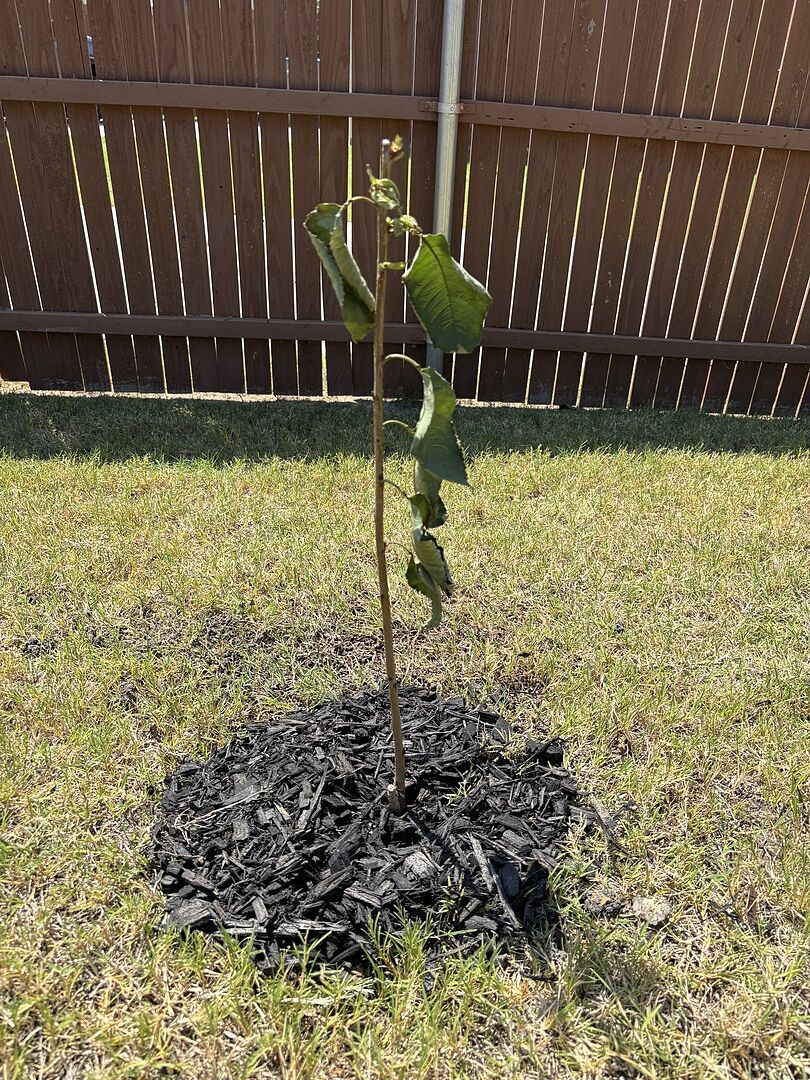
Overwatered trees often show droopy leaves and may drop leaves early. Underwatered trees look dry, with crispy, browning leaf edges. When in doubt, feel the soil—don't just look at it.
Sunlight
Light is how your tree produces the energy it needs to grow fruit. Get this right from the start, because once a tree is in the ground, moving it is a bigger project.
Most fruit trees are full-sun plants, meaning they need 6–8 hours of direct sunlight per day. Before you plant, spend a day watching how the sun moves through your yard and note which spots get consistent, unobstructed light.
A few things worth knowing:
-
Afternoon sun is more intense than morning sun, which matters in hotter climates.
-
The south side of your yard receives the most sunlight; the north side the least.
-
Too much intense sun can scorch the outermost leaves. Too little causes pale, sparse growth on elongated branches reaching toward the light.
-
If you're growing a fruit tree in a container, you can move it to chase sun—or use a shade cloth to dial back intensity if things get too hot.
Fertilizing
Fertilizer labels can look intimidating, but the basics are simple. Every fertilizer shows three numbers representing the percentage of Nitrogen (N), Phosphorus (P), and Potassium (K) in that order.
-
Nitrogen supports leafy, foliage growth.
-
Phosphorus supports flower development.
-
Potassium supports water retention and fruit development.
For fruit trees, you want a fertilizer that's higher in phosphorus and potassium to directly support flowering and fruiting, not just leaf growth. A general all-purpose fertilizer works, but a fruit-specific formula will do more for your harvest.
A few fertilizing guidelines to follow:
-
Start fertilizing at the beginning of the growing season and always read the label fully before applying.
-
Avoid fertilizing during heat, drought, or just before winter. Pushing new growth at the wrong time makes it vulnerable to damage.
-
If you apply too much, flush the soil with water to dilute it.
-
Composting is one of the most efficient ways to enrich your soil over time, feed your trees, and reduce how much packaged fertilizer you need.
Pruning
Pruning is a good thing even when it feels counterintuitive to cut back a tree you're trying to grow. Think of it like a haircut: it's done for health as much as looks, and your tree will grow back better for it. The key rule: never remove more than one-third of the tree at one time.
Why pruning matters
Regular pruning promotes airflow (which reduces fungal and bacterial issues), removes diseased or damaged wood, redirects the tree's energy toward fruit production, and keeps your harvest at a reachable height.
What to remove
When pruning for health, look for and remove:
-
Competing leaders (keep the strongest, remove the rest)
-
Crossing or rubbing branches
-
Branches growing toward the center of the tree
-
Dead, broken, or diseased wood
-
Weak growth at the base of the tree (suckers)
-
Crowded branches with poor airflow
When to prune
Timing matters. For most fruit trees, late winter (March) and early spring are the best windows, just before new growth begins. Pruning at the wrong time of year can set your tree back, so check the variety-specific guidance for your tree before you cut.
Flower and fruit thinning
Pruning isn't only about branches. Removing some flowers or immature fruits early in the season directs the tree's energy toward fewer, larger, better-tasting fruits and reduces the risk of branch splitting under the weight of a heavy crop.
Pollination
No pollination means no fruit. For many fruit trees, this happens naturally with help from bees, butterflies, and other insects, but it's worth understanding what your specific tree needs.
Some varieties of common fruit trees (like most peaches, avocados, citrus and figs) have "perfect" flowers containing both male and female parts, so a single tree can set fruit. Others, like apple trees and some cherries, require a second tree of a compatible variety nearby to cross-pollinate. In both cases, you will increase your fruit yield by planting multiple trees.
Before planting, check the pollination requirements for your specific variety. If you're growing indoors or in an area with low pollinator activity, you may need to hand-pollinate: use a small paintbrush or cotton swab to transfer pollen between open flowers every few days while your tree is blooming.
To attract more pollinators to your yard naturally, consider planting salvia, echinacea, or Goldsturm Black-Eyed Susan nearby.
Pests & Diseases
Even well-cared-for trees run into issues from time to time. The best approach is early identification: catch a problem when it's small and it's almost always manageable.
How to spot a problem
Know what your tree looks like when it's healthy. Our expert tip: take photos early and compare them over time. If something looks off, categorize it before reaching for a spray:
-
Spots, oozing, or abnormal leaf coloration → likely fungal
-
Visible insects, webbing, or bite marks on leaves → likely pest
-
Droopy, limp branches and leaves → likely environmental
-
Yellowing leaves or slow, abnormal growth → likely nutritional
-
Torn, broken, or bruised tissue → likely physical damage
Common fruit tree pests
| Pest | What to look for | Treatment |
|---|---|---|
| Aphids | Tiny clustered insects on leaves; sticky residue | Neem oil or horticultural oil; or let ladybugs do the work |
| Scale | Brown/black bumps on stems and undersides of leaves | Dab with rubbing alcohol; check weekly |
| Leafrollers | Worm-like insects curling leaves with webbing | Remove by hand; encourage natural predators |
| Mealy bugs | White fuzzy clusters at stem bases | Dab with rubbing alcohol; monitor weekly |
| Maggots | Brown/black spots on fruit starting around July | Remove affected fruit; set sticky traps in fall |
Common fruit tree diseases
| Disease | What to look for | Treatment |
|---|---|---|
| Fire blight | Branch tips look scorched from the tip down | Prune 3" into healthy tissue; sanitize tools between cuts |
| Scab | Dark, rough spots on fruit and leaves | Remove affected areas; improve airflow; fungicide if severe |
| Leaf curl | Dry, curled, sometimes red leaves (common on peaches) | Remove affected leaves; preventative copper fungicide before buds emerge |
| Brown rot | Rotted-looking stems, flowers, and fruit while still on tree | Remove affected areas; prune for airflow; fruit-safe fungicide |
| Canker | Swollen, sunken, oozing sores on branches or trunk | Prune out or scrape clean; seal the wound with tree sealant |
When treating any issue, be targeted. Only spray for the problem you have, choose fruit-safe products, and read every label fully. Many pest and disease issues can also be addressed without chemicals through physical removal, improved airflow, and keeping the area clean.
Harvesting
Getting your timing right at harvest makes a real difference in flavor, and knowing what to look for takes the guesswork out of it.
A fruit is ripe when its color is fully developed and it gives slightly when gently squeezed. Ripe fruit will also detach easily from the branch—if you're pulling hard, give it more time.
Harvest by category
-
Pick before fully ripe (these continue to ripen off the tree): Pears, persimmons, avocados, bananas, mangoes, paw paws
-
Pick when ripe (these won't continue to ripen once off the tree): Apples, cherries, citrus, figs, grapes, all berries, pomegranates
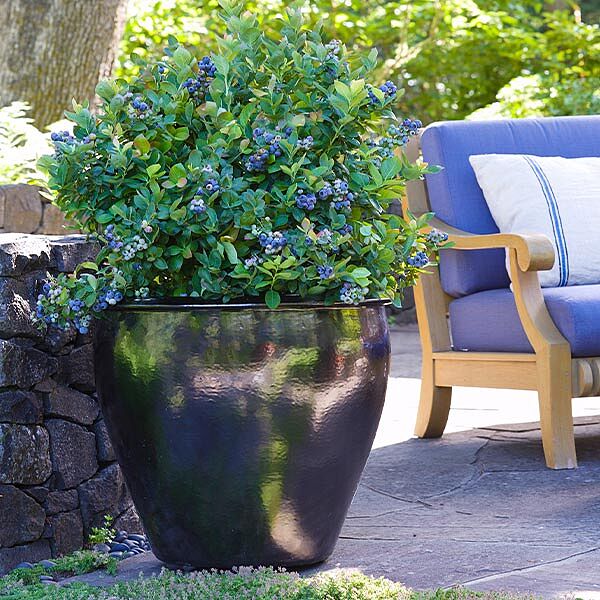
- Pick anytime (wider harvest window): Peaches, nectarines, plums, kiwis, blueberries
Harvesting tips
-
Only harvest what's ready—not everything at once.
-
Use the gentle twist method for apples, peaches, and plums: hold the fruit at the base, lightly push toward the branch, and twist as you pull away. Ripe fruit releases without a fight.
-
Harvest cherries with pruners to keep the stems on.
-
For nut trees and mulberries, lay a tarp under the tree and gently shake branches to collect ripe fruit.
-
Bring a sturdy basket or harvest bag—bruised fruit doesn't store as well.
Storing your harvest
-
Freeze: Works especially well for berries. Wash, dry, and store in freezer-safe containers.
-
Refrigerate: Extends shelf life for apples, pears, cherries, figs, and pomegranates.
-
Room temperature: Best for citrus, plums, kiwis, and fruits that still need to ripen.
-
Bake or preserve: Peaches and plums have a shorter shelf life—great candidates for jam, baking, or canning right after harvest.
Common Issues & Fixes
| Problem | Likely Cause | Solution |
|---|---|---|
| No fruit on a healthy-looking tree | Pollination gap or wrong chill hours for your zone | Confirm pollination requirements; check chill hour needs for your variety |
| Fruit drops before it's ripe | Overwatering, stress, or pest damage | Adjust watering; inspect for pests; ensure proper fertilization |
| Yellowing leaves | Nutritional deficiency or overwatering | Check soil moisture; switch to a fruit-specific fertilizer |
| Slow or no growth in year one | Normal establishment period | Be patient—year one is for roots. Visible growth comes in years two and three |
| Biennial bearing (light harvest every other year) | Natural tree behavior | Consistent fertilizing and care helps minimize the swing |
| Wildlife damage (deer, rabbits, squirrels, birds) | Hungry neighbors | Install barriers, netting, or repellents; dedicate a small fruiting plant to wildlife as a distraction |
A Note on Patience
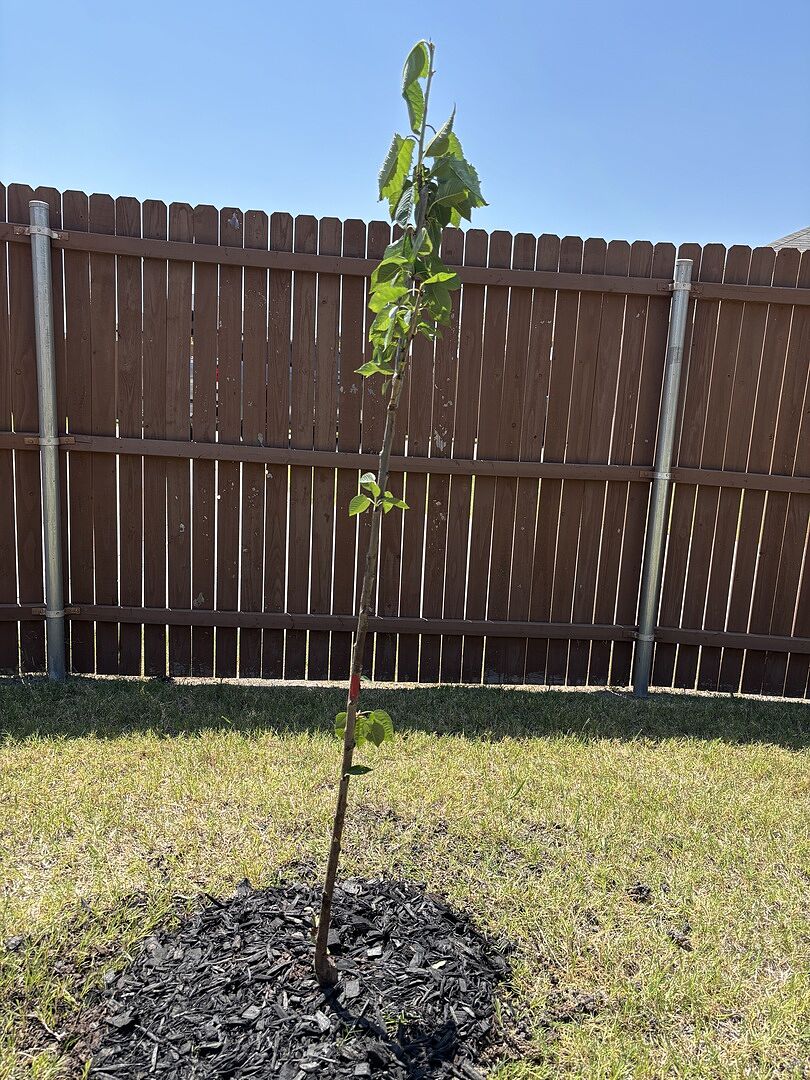
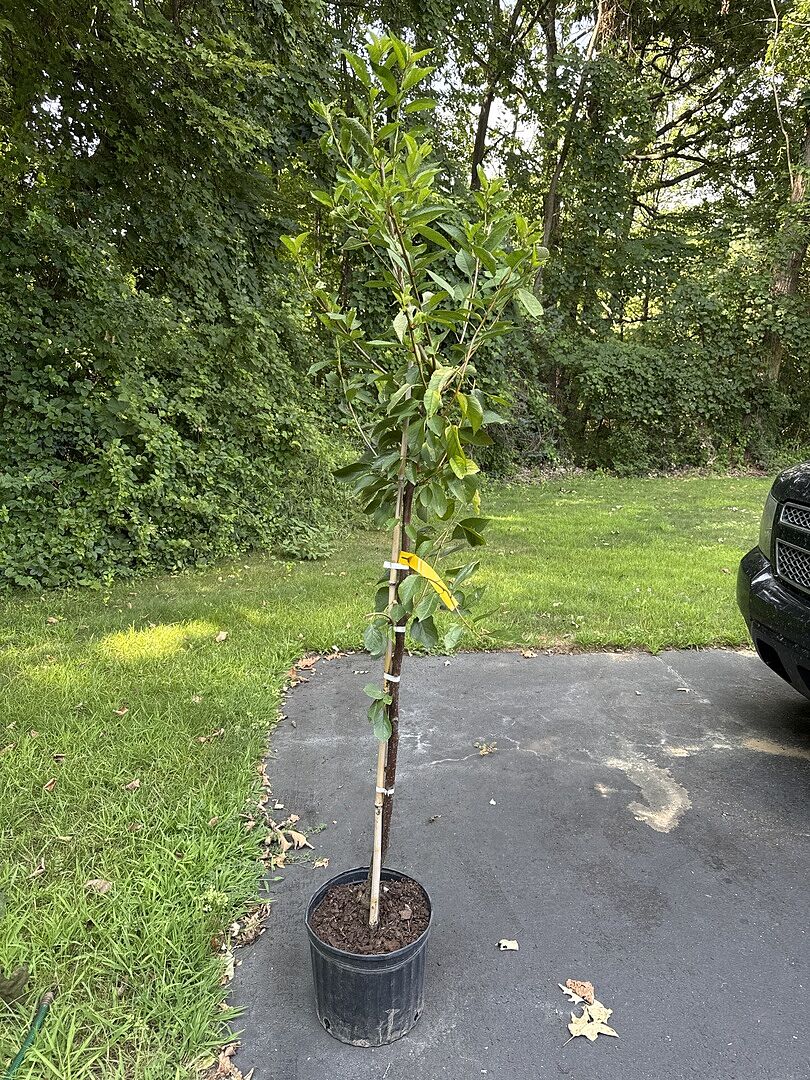
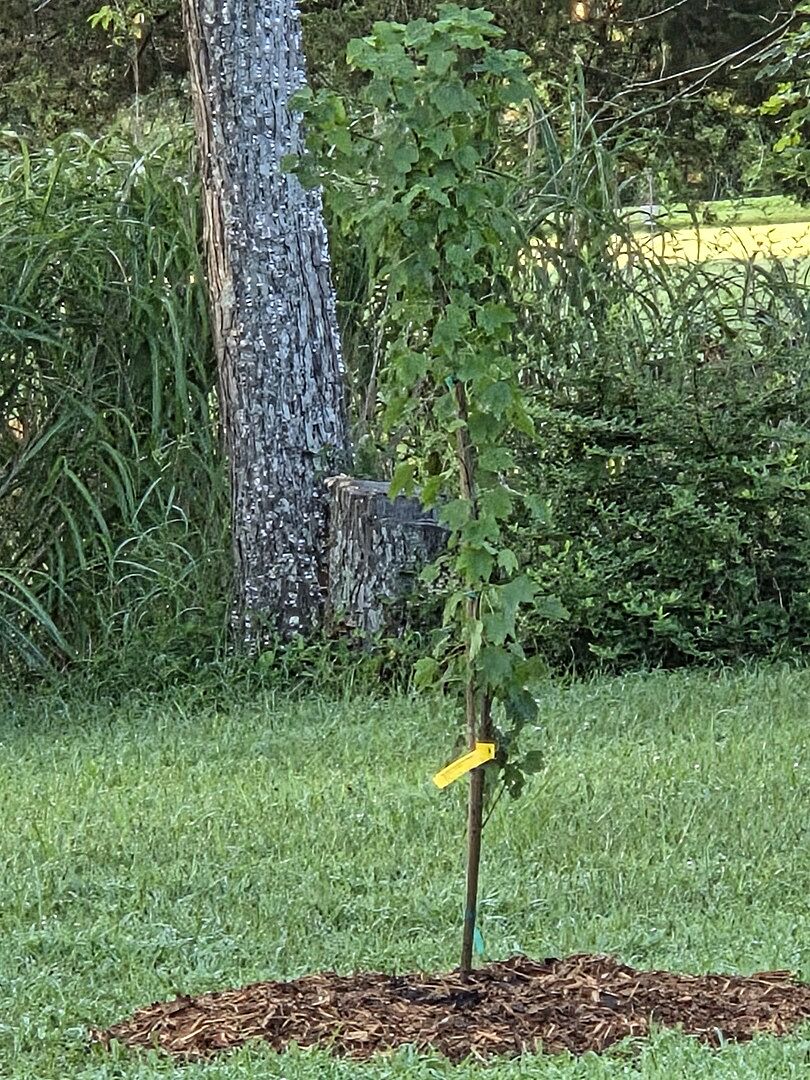
Most fruit trees you bring home aren't fully mature yet, and that's a good thing. Younger trees focus their energy on root establishment in year one, which sets up everything that comes after. Semi-dwarf trees typically begin producing regular harvests within 2–4 years; standard sizes may take a little longer.
Don't judge your tree's productivity in its first season. Give it consistent care, stay curious about what it's telling you, and trust the process. The harvest you're working toward is worth it.
Recommended Products
The right products make getting started easier and help your trees recover from stress more quickly.
-
Root Rocket® Citrus Tree Rocket: A fruit-specific formula designed to support strong root establishment and early growth after planting.
-
ArborRain® Slow-Release Watering Ring: Delivers deep, even moisture right to the root zone—ideal for newly planted trees.
-
Growscripts Avocado Tree Care Kit: Suitable for both novice and experienced growers, it includes essential tools for avocado tree care
Have questions about your specific tree? Our plant experts are here to help! From choosing the right variety to troubleshooting an issue mid-season. Contact our team and we'll point you in the right direction.